
I came home from Ecuador in May with hundreds of photos, a sunburned neck, and a new understanding of the word precious.
One of my most memorable experiences happened when we first arrived at the Yanacocha Reserve. We observed an Andean Condor floating on the wind currents. The Andean Condor, one of the world’s largest flying birds, is an iconic species deeply woven into the cultural fabric and mythology of South America. With a wingspan exceeding 10 feet, this scavenger soars effortlessly over the Andes mountains and Pacific coastlines. The species currently faces significant challenges, leading to its classification as vulnerable, meaning it’s at some risk of becoming extinct.
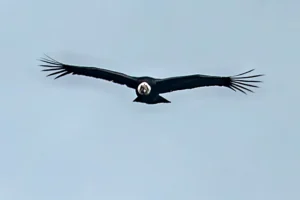
Andean condor soaring in the wind
Qui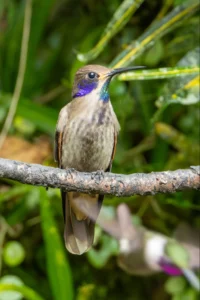 to: warming up with hummingbirds
The birds started early. On our second morning we headed up the slopes of Volcán Pichincha to the Yanacocha Reserve, just 40 minutes from Quito. Its 960 hectares protect a rare Polylepis woodland, a twisted, papery-barked forest that shelters the endangered Black-breasted Puffleg, the official bird emblem of Quito. We also met the Curve-billed Tinamou, Ocellated Tapaculo, and Mountain Tanagers. Lunch in the little town of Nono turned out to be a hummingbird circus, with dozens of fearless birds hovering inches from our faces. [Add your standout species.] That evening, a lecture on the birds of the Galápagos got us ready for what came next.
Galápagos: our floating home
We flew to Baltra and boarded the Tip Top V, a large catamaran, that became home for the week. Our first landing was at Playa Las Bachas, a beach named for two American barges abandoned there in World War II, where we walked to the flamingo lagoons.
Genovesa: the bird island
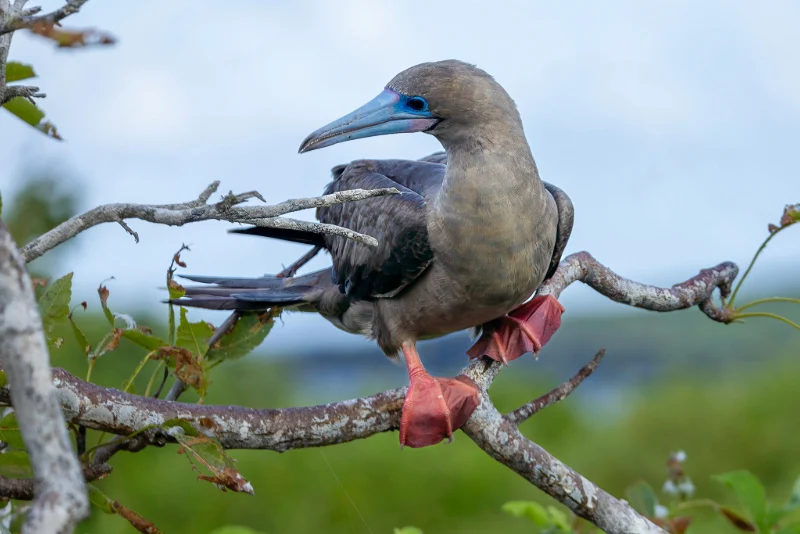
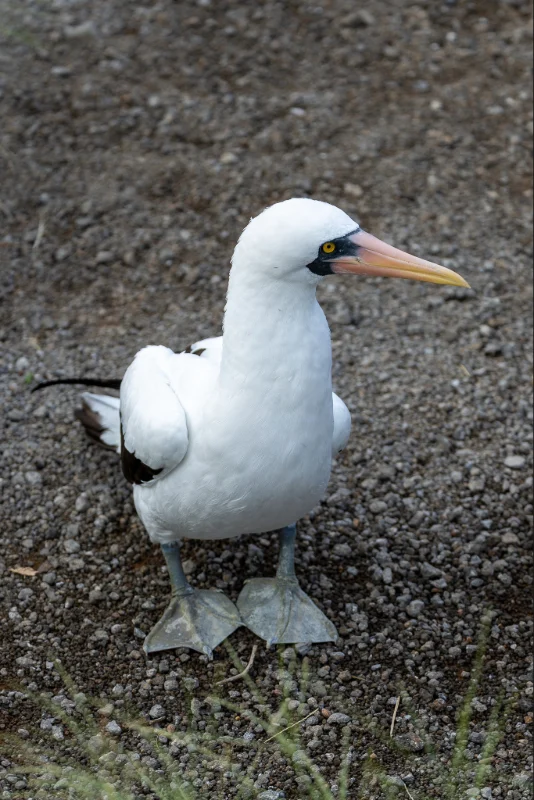
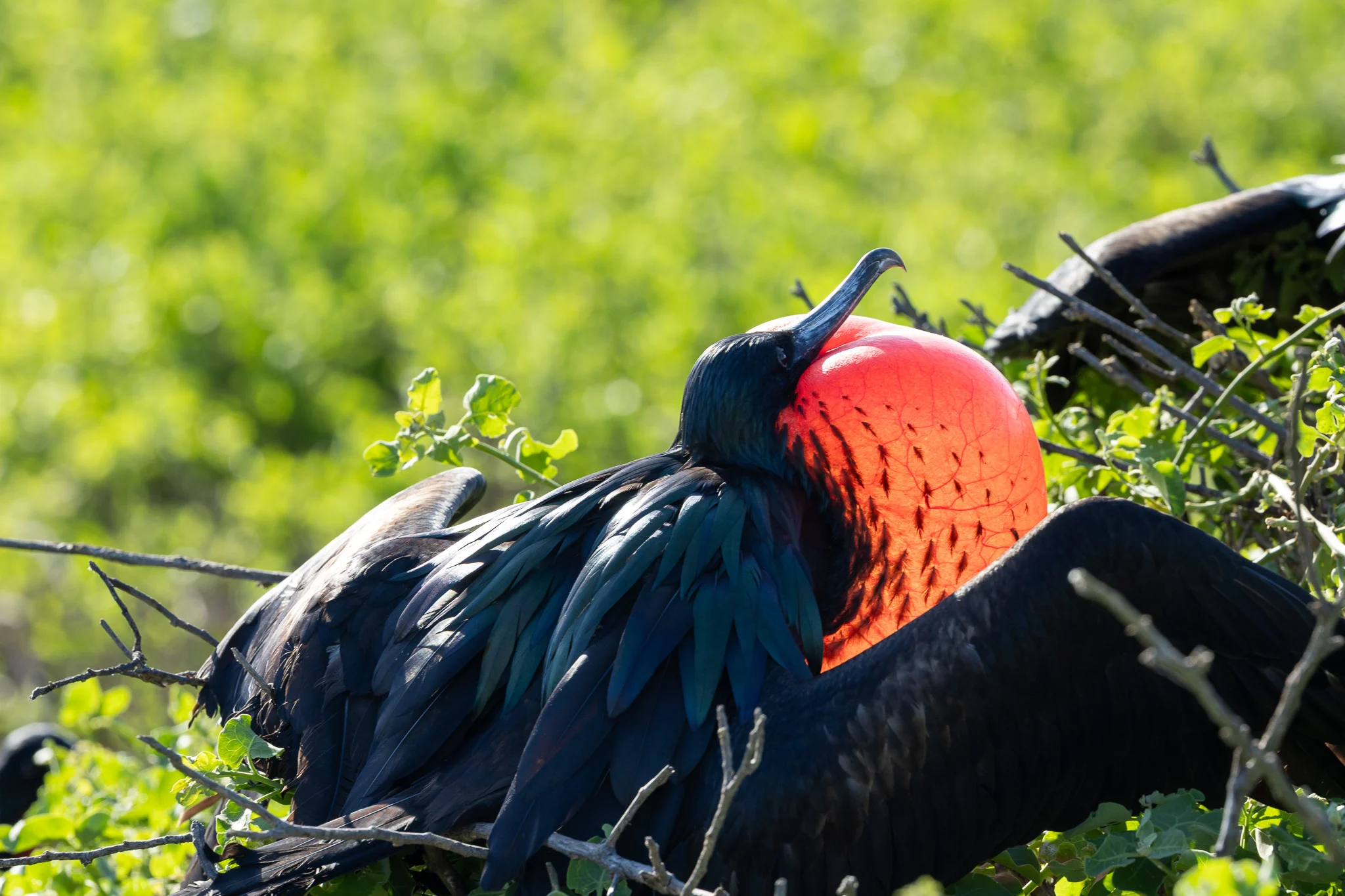
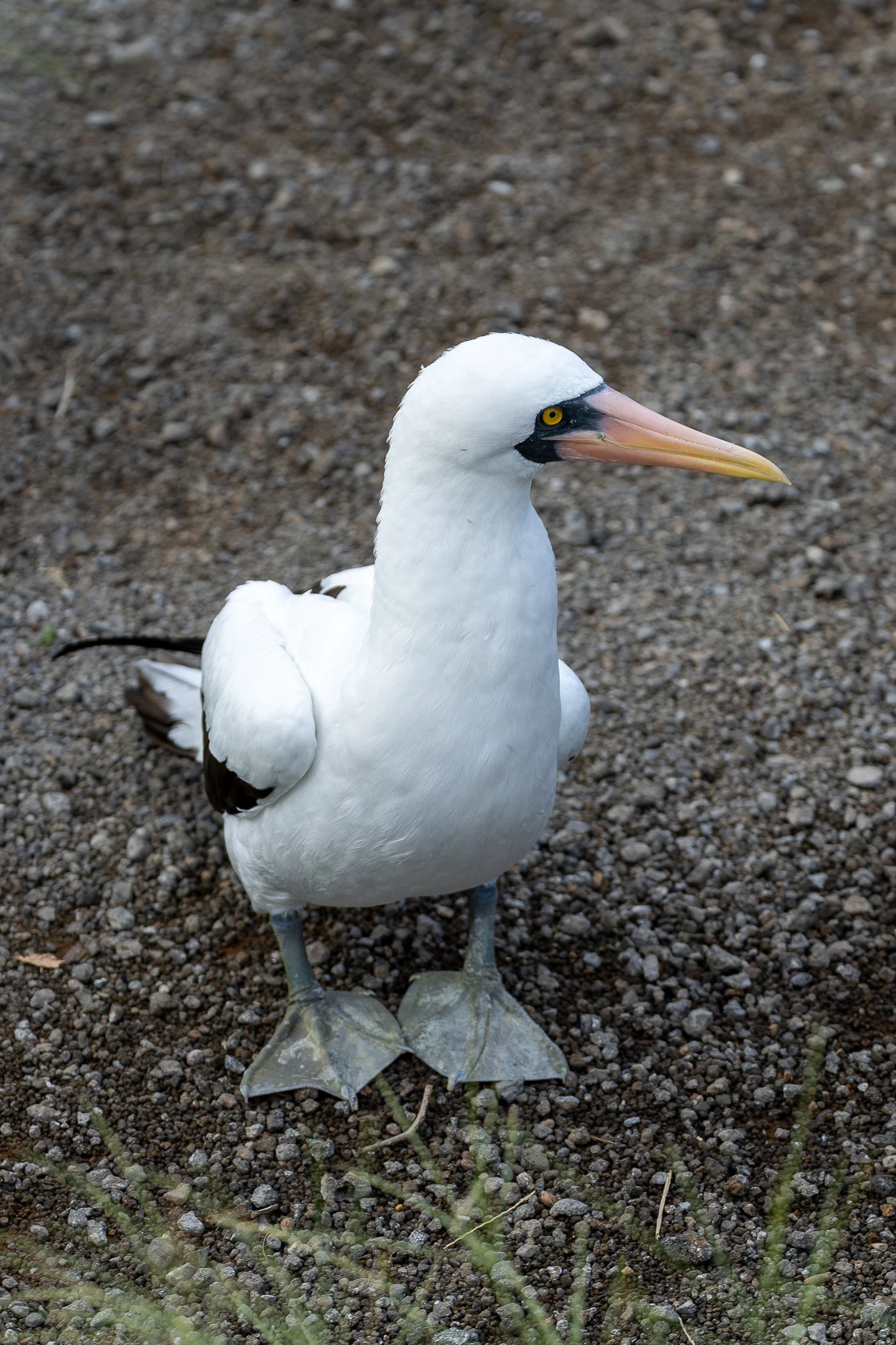
Genovesa is a horseshoe-shaped caldera with a bay at its center, and it may be the best birding of the trip. We landed on Darwin Bay’s white-sand beach and walked a trail where frigatebirds, herons, shorebirds, and Red-footed and Nazca Boobies carried on as if we weren’t there. At Prince Philip’s Steps, we climbed to a palo santo forest and found Red-billed Tropicbirds, Swallow-tailed Gulls, and the Galápagos Short-eared Owl. Red-footed Boobies court and nest in the trees, so we spent plenty of time looking up.
South Plaza and Santa Fé: color and cliffs
South Plaza is small, but it’s the most colorful stop of the trip. A bright red carpet of sesuvium covered the rocks against the deep blue Pacific, with land iguanas dozing under the Opuntia cacti. Along the sea cliffs, Red-billed Tropicbirds, Galápagos Shearwaters, Swallow-tailed Gulls, and Nazca and Blue-footed Boobies rode the updrafts. [Add your best color shot.]
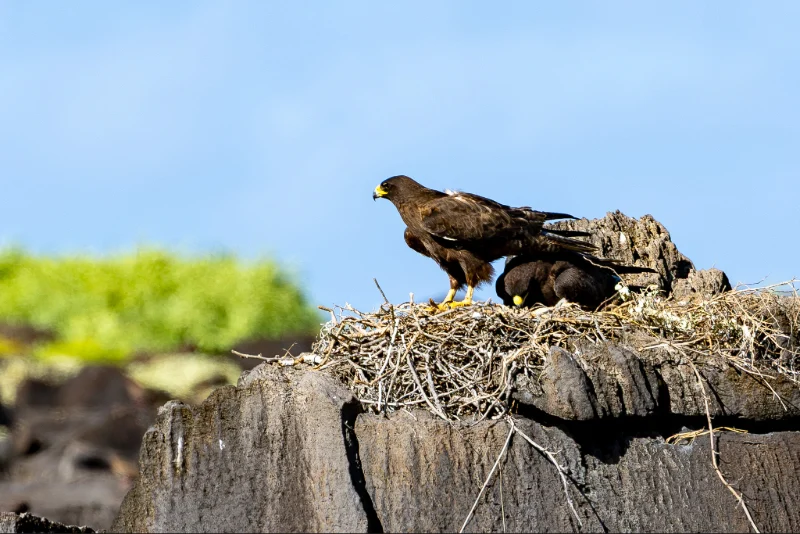
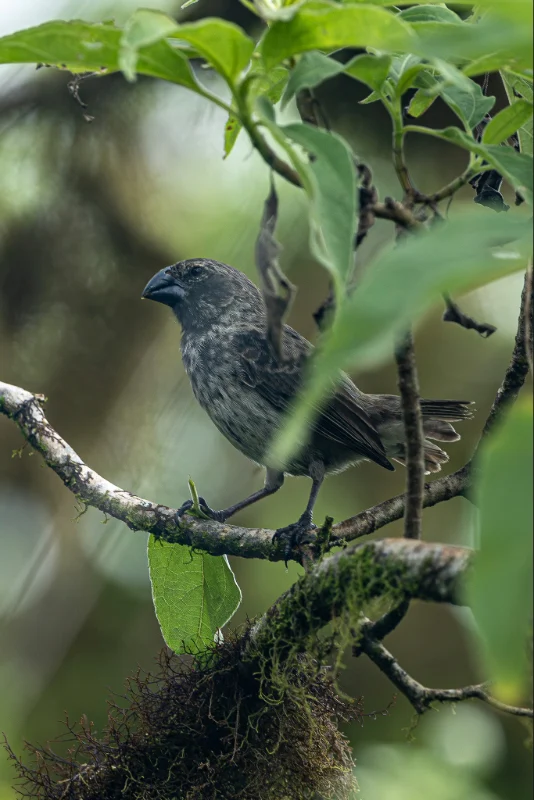
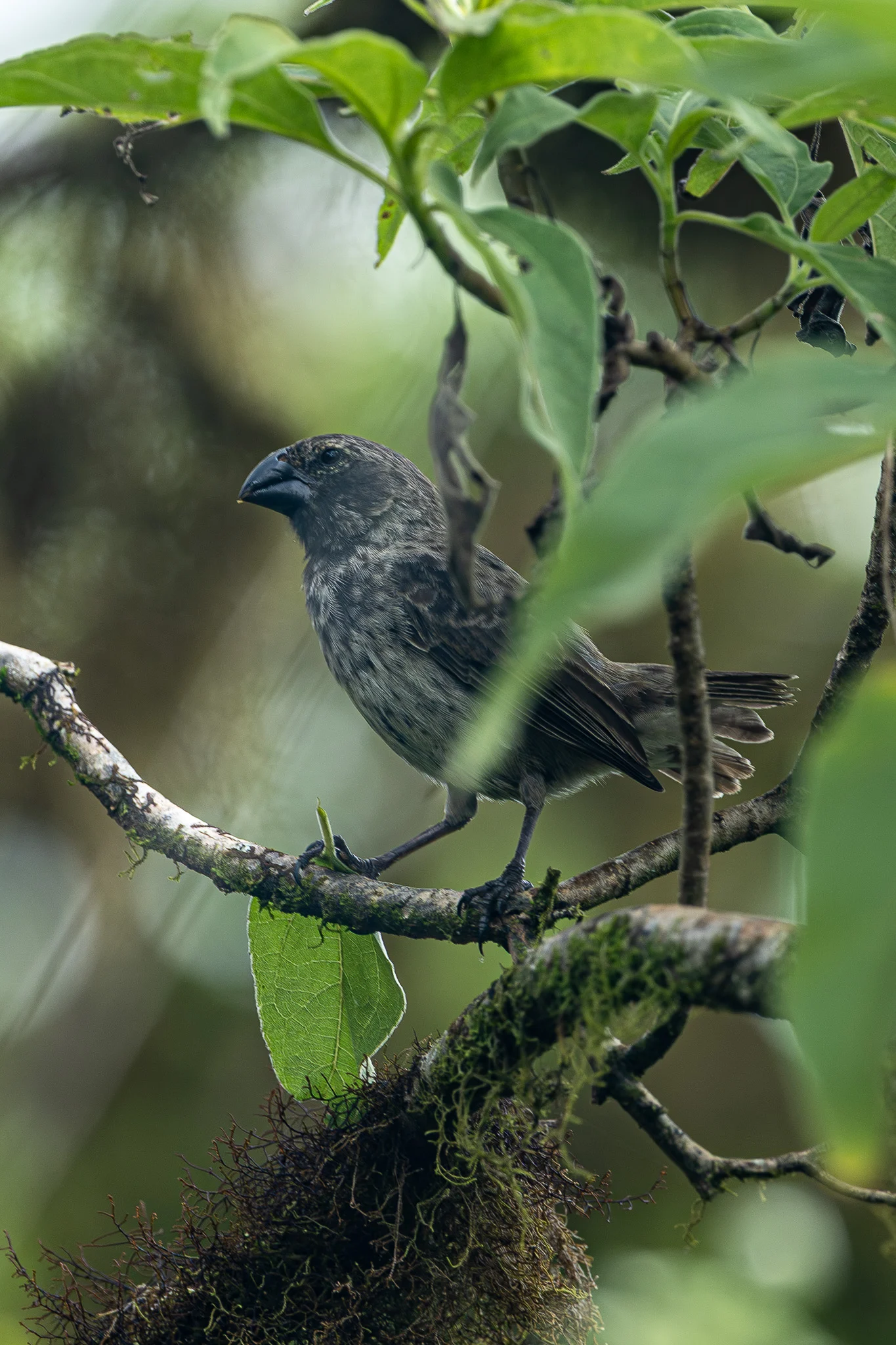
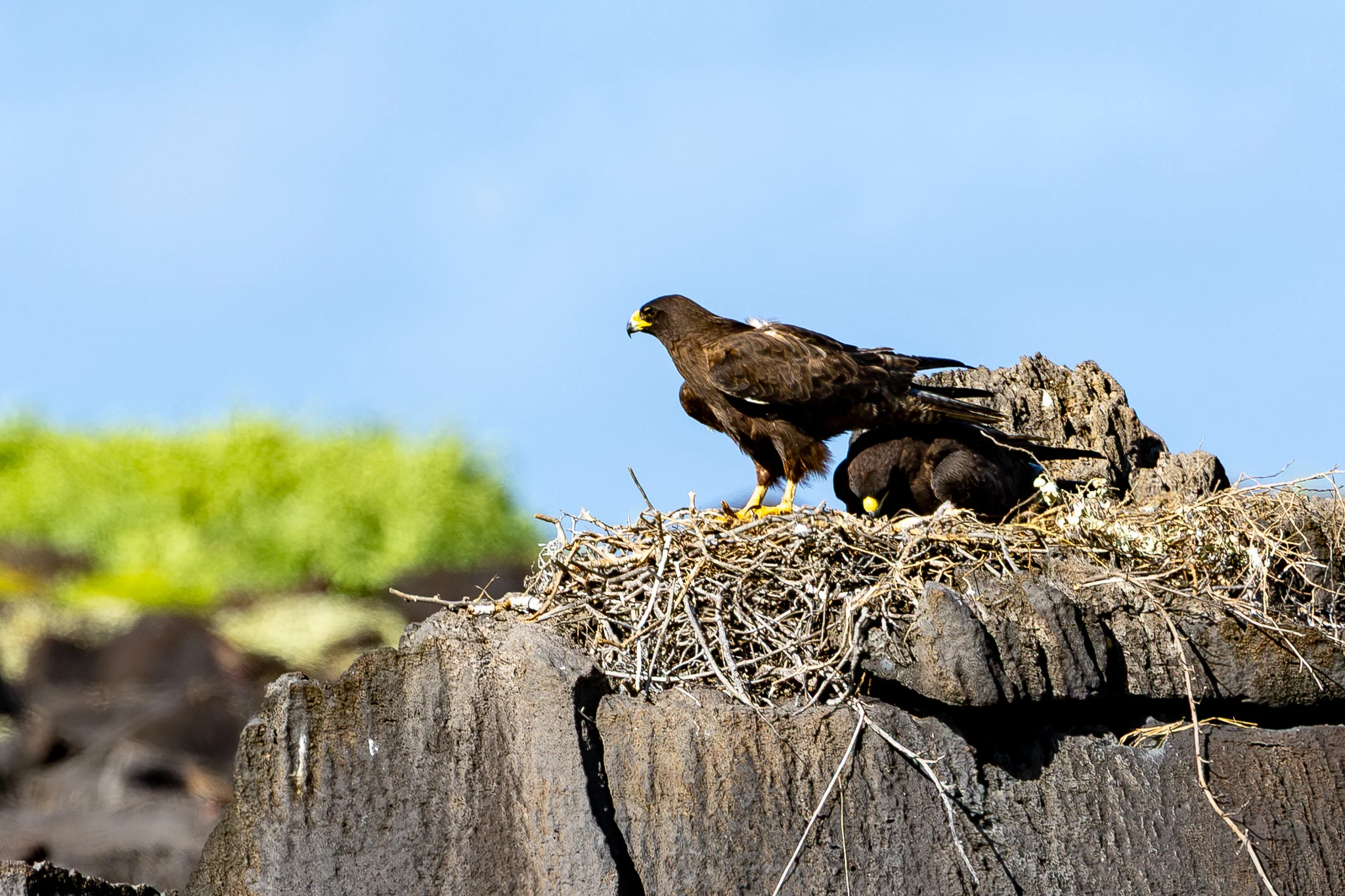
That afternoon we landed on Santa Fé to meet its own pale yellow species of land iguana, found nowhere else. We also saw a Galápagos Hawk, Darwin’s finches, and a racer snake, then finished the day snorkeling among sea lions. [Add a favorite moment.]
Santa Cruz: tortoises and a conservation story
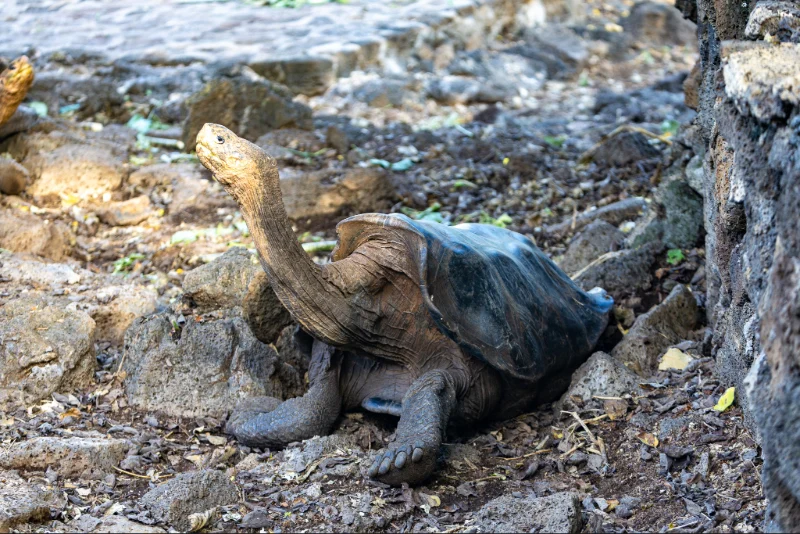
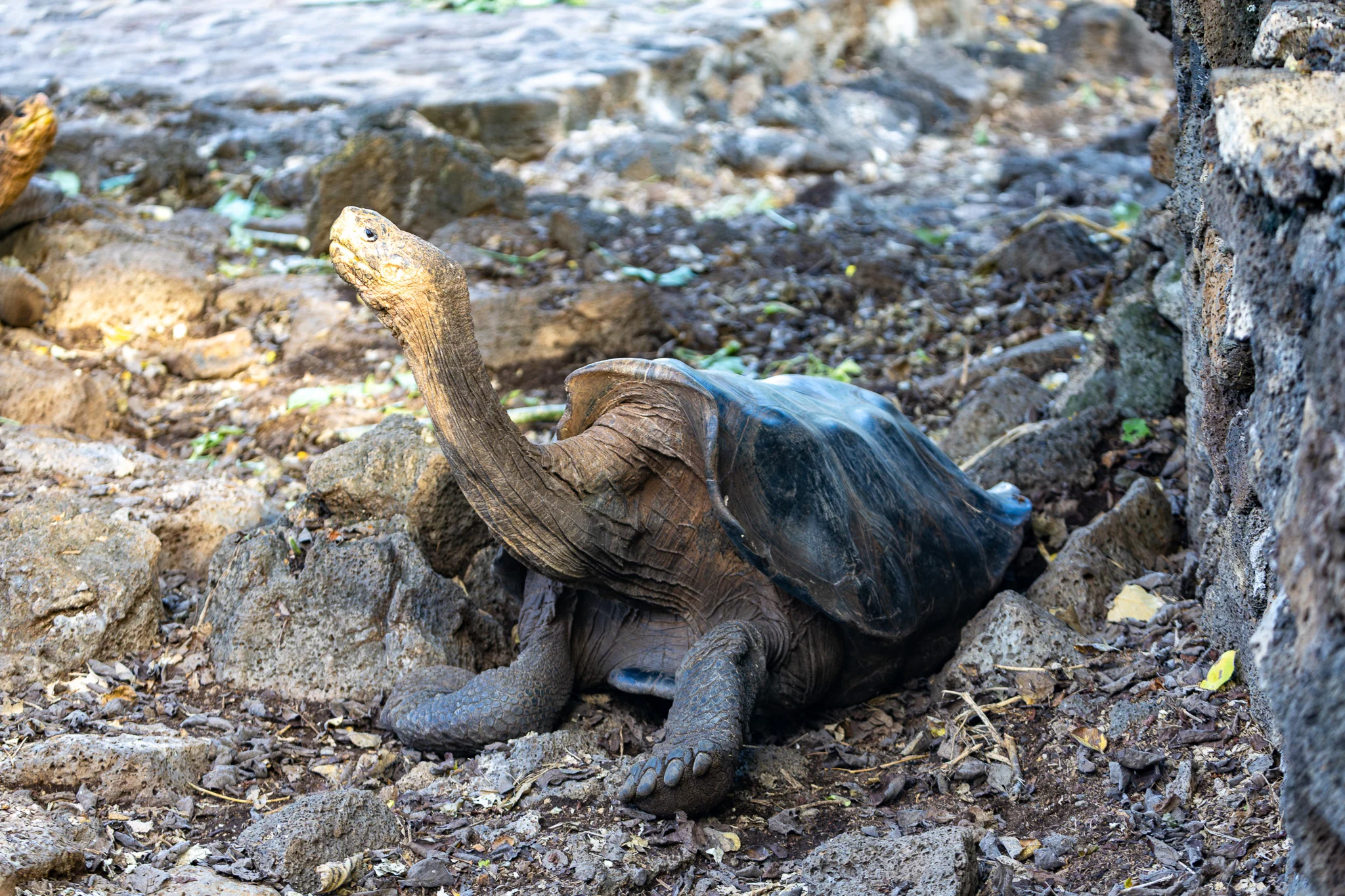
From Puerto Ayora, we rode up into the misty highlands to the Scalesia forests around Los Gemelos, twin collapsed craters, and had lunch at a local farm where giant tortoises wander freely. The islands were once called the Islands of the Tortoises on early maps, and these animals helped shape Darwin’s thinking. [Describe your first wild tortoise.]
Back in town, we visited the Charles Darwin Research Station and the Fausto Llerena Breeding Center, where tortoises are raised for reintroduction into the wild. This was where the trip’s theme came into focus: the wildlife you see here exists because people are working to keep it that way.
Floreana: barrels, baronesses, and baby turtles
Floreana is one of the few inhabited islands, with a history of settlement and hardship. At Post Office Bay, we visited the barrel that British whalers set up as an informal mailbox in the 18th century. The tradition lives on, and visitors still leave postcards for others to carry home. [Add who you sent a card to.] At Baroness Viewpoint, we looked over the ruins of the home of Baroness Eloise von Wagner, one of the island’s more colorful characters.
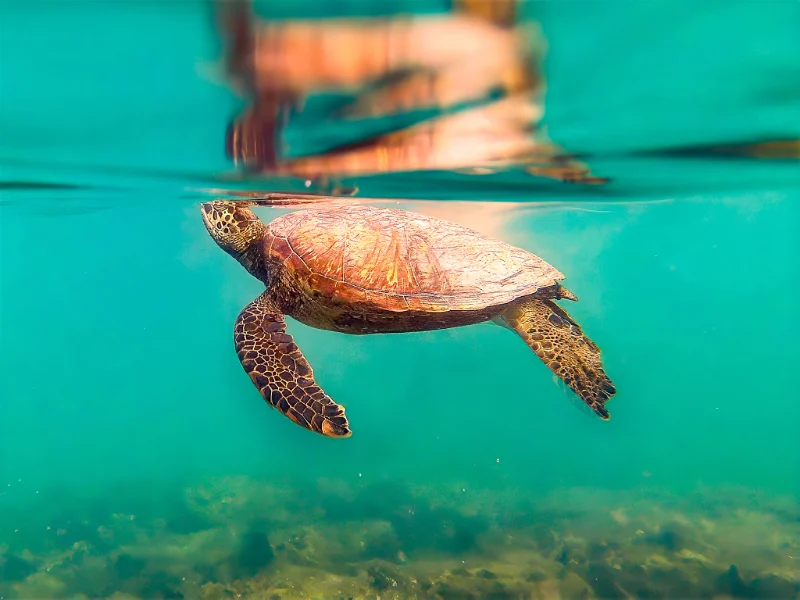
The afternoon was for wildlife. Champion Islet, one of the best snorkeling spots in the islands, delivered moray eels, sharks, turtles, and sea lions. At Cormorant Point, a brackish lagoon held American Flamingos and shorebirds. Nearby, La Picona beach is an important nesting site for Galápagos green turtles. Hatchlings begin emerging in April and May, so we were visiting right at the season when the perilous trip to the sea begins. [Did you see any hatchlings?]
Española: the Albatross Island
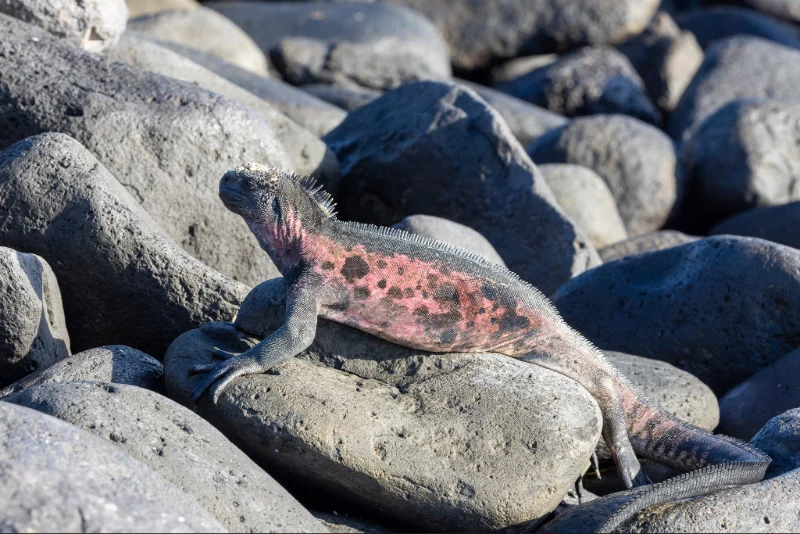
Española is the oldest island in the archipelago, and at Punta Suárez it feels like it. We hiked across lava beds and along scenic cliffs past green-and-red marine iguanas, sea lions, and lava lizards. But the real draw is the Waved Albatross. From mid-March to December, Española is one of the best places in the world to see them, since most of the species’ nests are here. Their intricate courtship rituals begin in April, and by May the pairs are nesting, which meant our timing was perfect. The Waved Albatross is now considered critically endangered and nearly the whole population nests on Española.
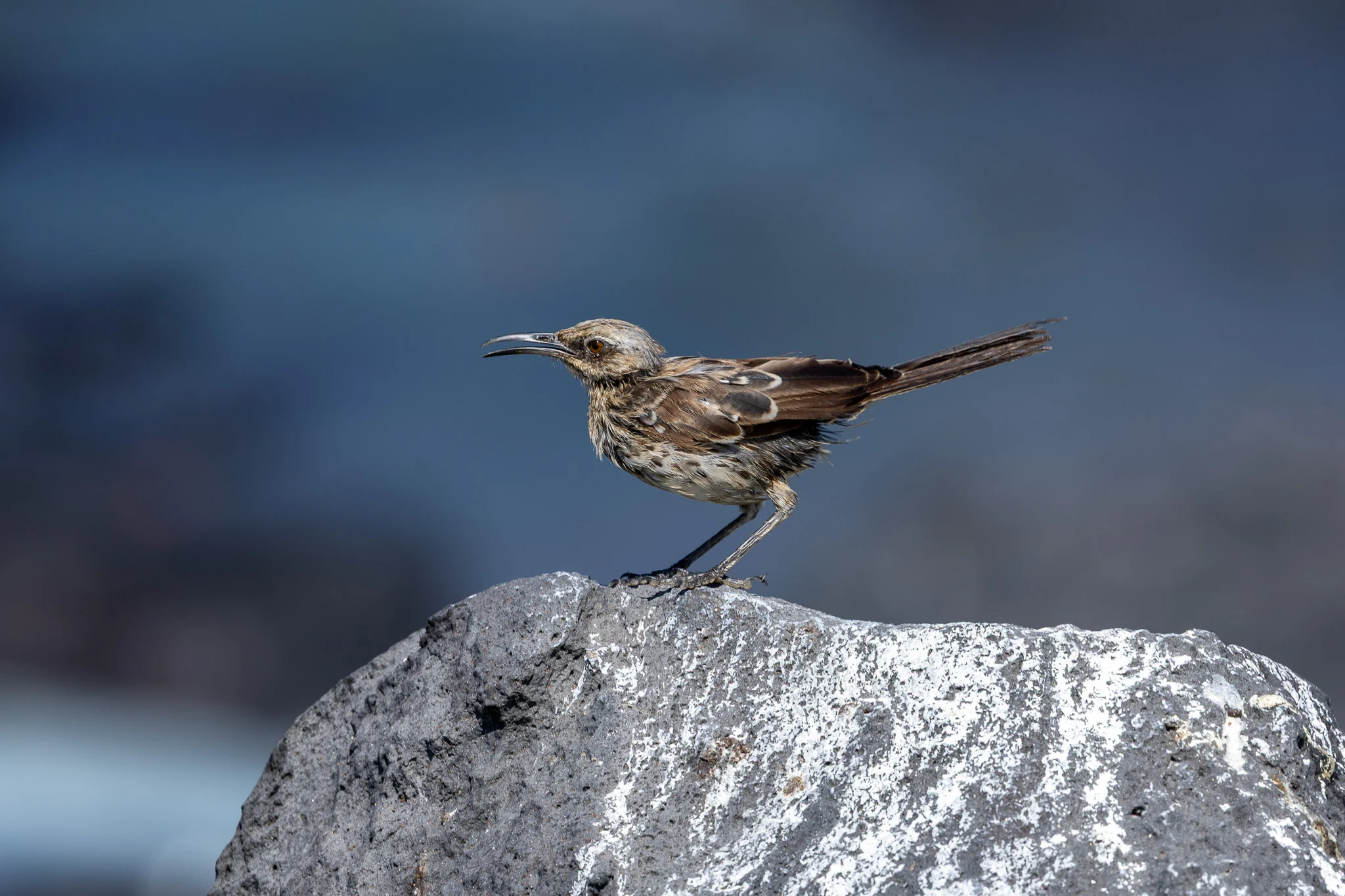
After lunch we walked the beach at Gardner Bay, where sea lions sprawled in great numbers during breeding season. We watched for the Española Mockingbird, a carnivorous endemic, and for Darwin’s finches, then took a panga ride around Osborn Islet and the Gardner islets before a swim or snorkel.
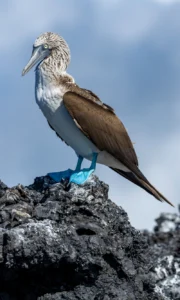
Blue-footed Booby
San Cristóbal: three boobies, one beach
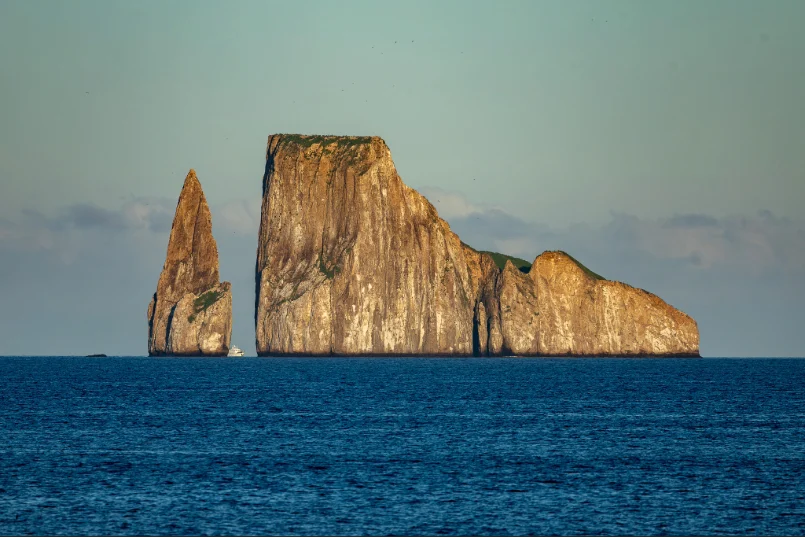
At Cerro Brujo, a wet landing put us on a white-sand beach said to be the only place in the Galápagos where all three booby species nest together. Sea lions, pelicans, finches, and mockingbirds shared the sand. [Add which boobies you spotted.] Then we sailed around Kicker Rock (León Dormido), the remnant of a vertical tuff cone split by a narrow channel. Its cliffs are a favorite nesting spot for Nazca and Blue-footed Boobies and frigatebirds, while sharks, turtles, and rays patrol the water below. The afternoon brought Isla Lobos, with more Blue-footed Boobies, frigatebirds, rays, and sea lions.
Isabela: fire and penguins
Our last morning on the boat took us through Black Turtle Cove, a maze of mangrove-lined coves where white-tipped reef sharks, sea turtles, and eagle rays glide beneath the panga. Then we said goodbye to the Tip Top V and took the ferry to Isabela and Scalesia Lodge.
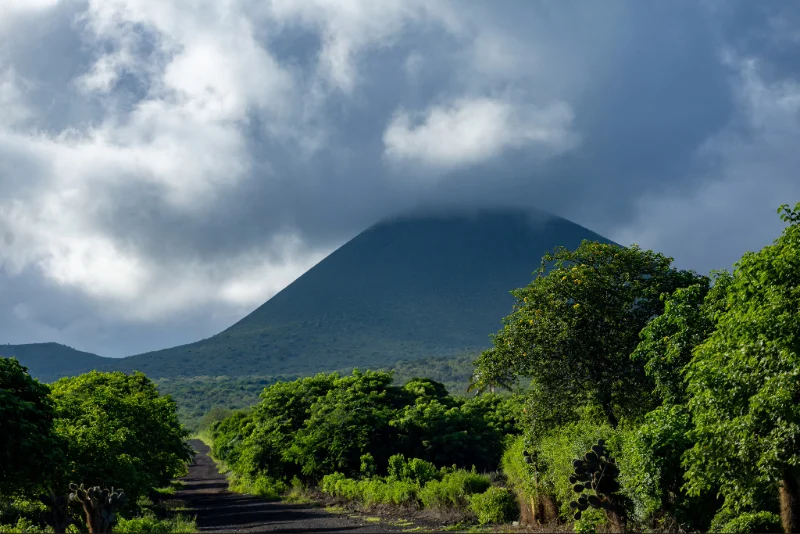
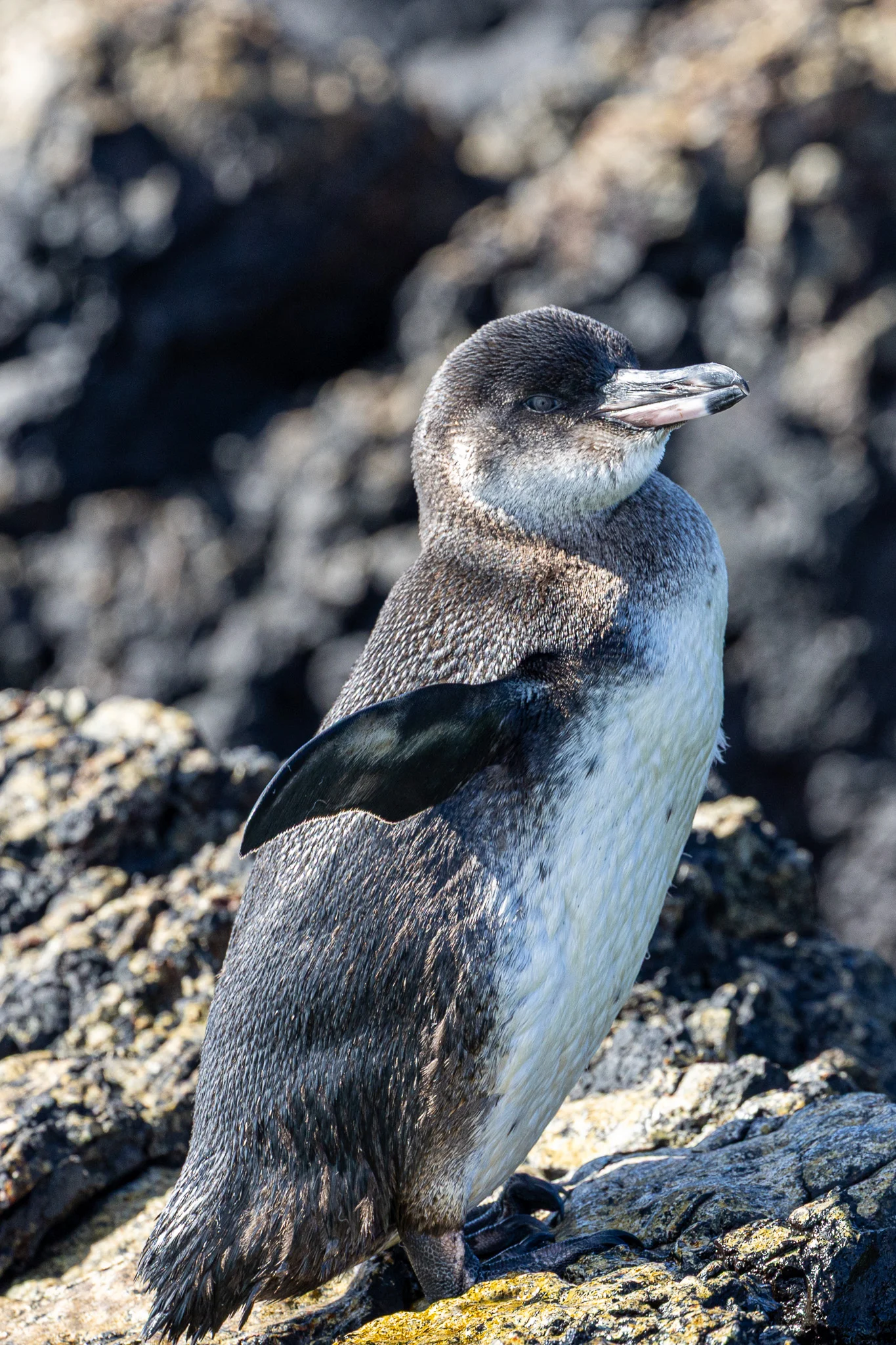
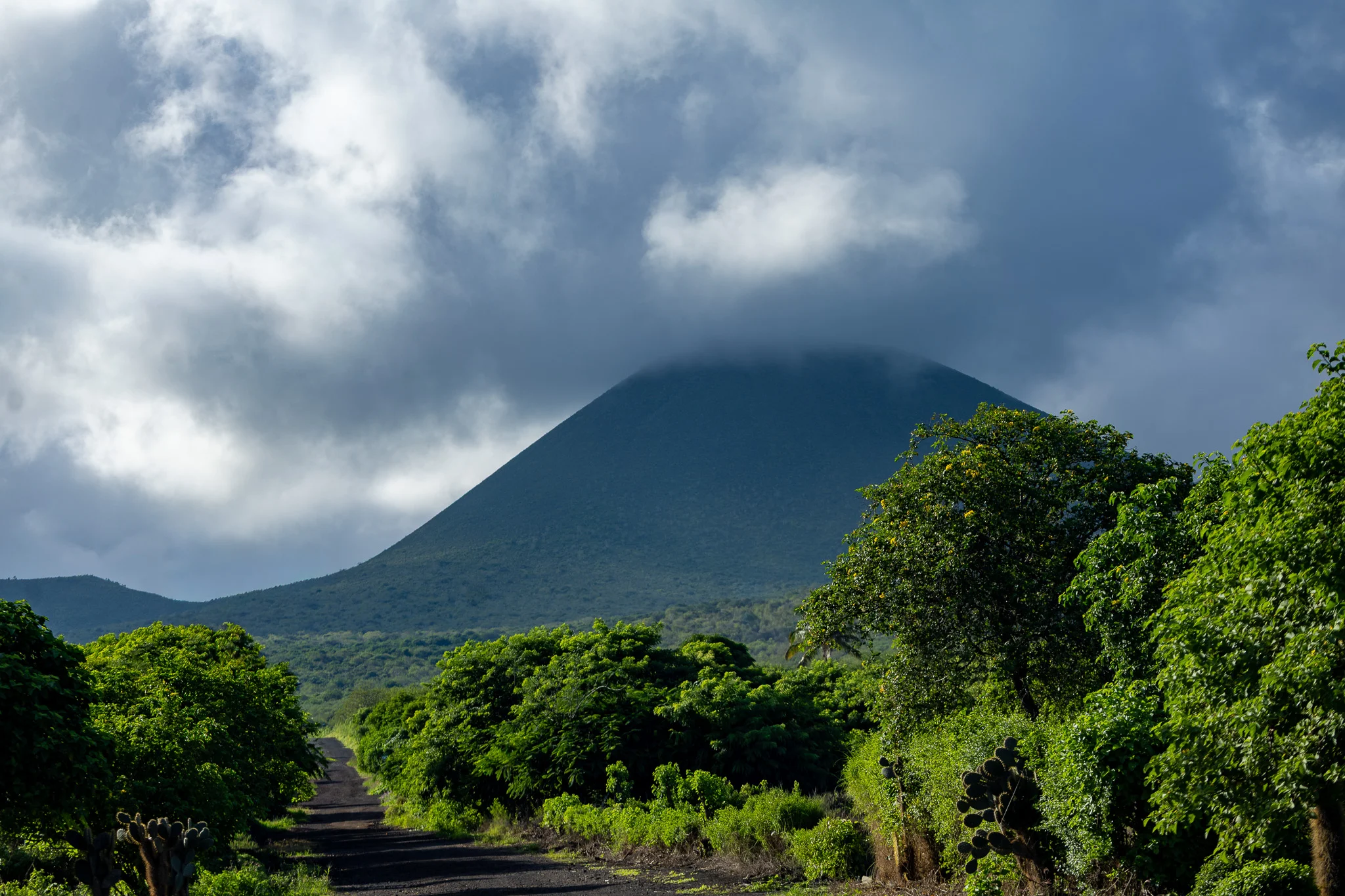
Isabela showed us the volcanic side of the archipelago. We hiked around Sierra Negra, one of the most active volcanoes in the islands, whose crater is among the largest in the world at 6.2 miles across, and Volcán Chico, where sulfur vents hiss. [Add what the landscape felt like.] In the afternoon, at Tintoreras, we walked past marine iguanas and sea lions and looked down into a crevice of resting white-tipped reef sharks. Then a boat along the rocky shore went in search of Galápagos Penguins and flightless cormorants, two of the rarest birds on Earth.
Why it matters
From a cloud-forest reserve to a tortoise breeding center to a volcano-ringed island, every place on this trip survives because someone decided it was worth protecting. The Galápagos rules, with marked trails, naturalist guides, and itineraries that bend to the park’s decisions, exist because these animals evolved without fear of us and deserve to keep that trust. [Close with your own reflection and an invitation to readers.]
Cheers,
Dave
Stay Connected
Join my collector’s list to receive updates on new releases, exhibition openings, and behind-the-scenes stories.