
Check out the “Ecuador and the Galápagos Islands” collection for photos from this trip!
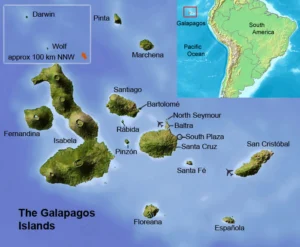
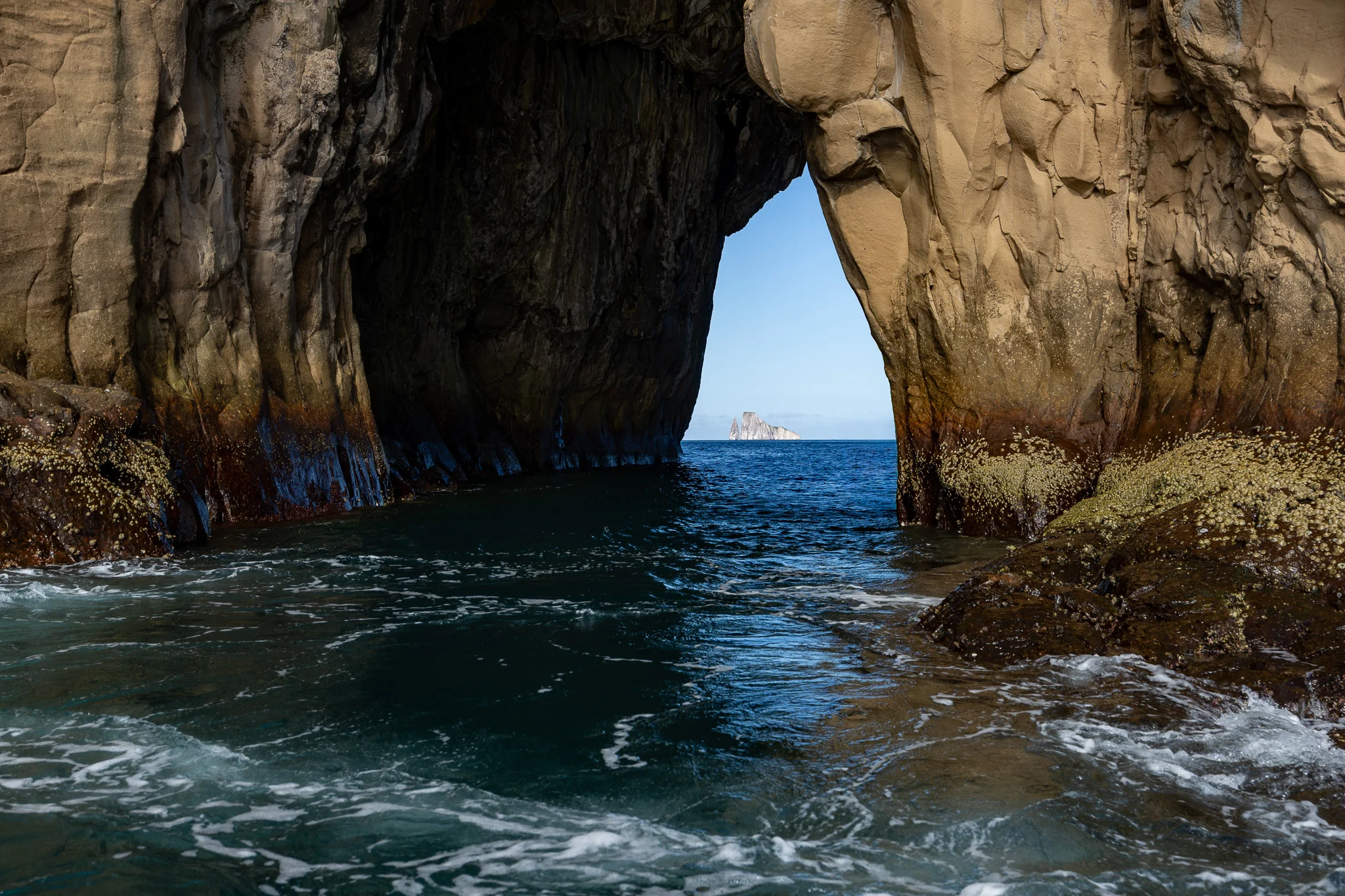
The Galápagos Islands sit way out in the eastern Pacific, about 600 miles off the coast of Ecuador (which they’re officially part of). The chain is made up of 13 big islands, ranging from pretty small to massive (the largest is over 1,700 square miles), plus 6 smaller ones and a ton of tiny islets and rocks scattered along the Equator. All together, the land adds up to around 3,093 square miles, but it’s spread out across a huge stretch of ocean — roughly 23,000 square miles.
Ecuador first protected part of the islands back in 1935, turning it into a wildlife sanctuary, and that eventually became Galápagos National Park in 1959. The islands got UNESCO World Heritage status in 1978, and in 1986 the surrounding waters were protected too, with the creation of the Galápagos Marine Reserve. There’s also the Charles Darwin Research Station on Santa Cruz Island, which focuses on studying and protecting the islands’ unique plants and animals.
The Trip
In May 2026, I headed to Ecuador and the Galápagos with an Audubon group of fellow birders and wildlife lovers from South Florida. We kicked things off in Quito, Ecuador’s capital and second-largest city, home to about 2.8 million people. Quito’s also one of the highest cities on Earth, sitting at 9,350 feet.
Our first outing was to the Yanacocha Reserve on the slopes of Volcán Pichincha. This reserve protects a big stretch of woodland that’s basically hummingbird heaven, including the endangered Black-breasted Puffleg — Quito’s official bird emblem. I got really lucky and snagged a great shot of one, along with plenty of other hummingbirds and birds. The next day, we flew from the mainland to a tiny airport on Baltra Island in the Galápagos. From there, we spent nine days hopping between islands on a catamaran — hiking, exploring, and snorkeling along the way.
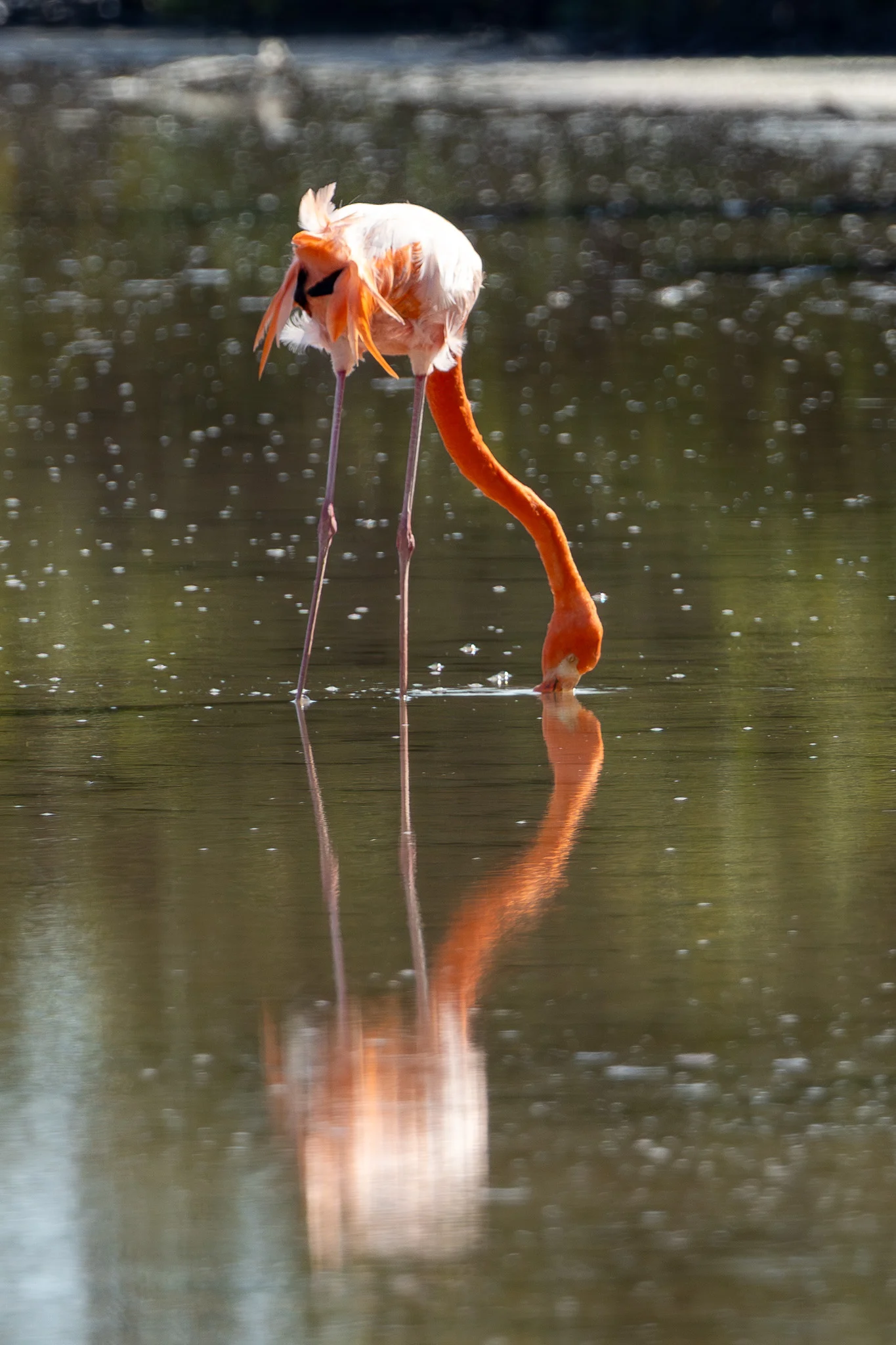
Day 1 — Santa Cruz Island. We hiked to the flamingo lagoons behind Playa Las Bachas, a beach the U.S. Army actually used during World War II.
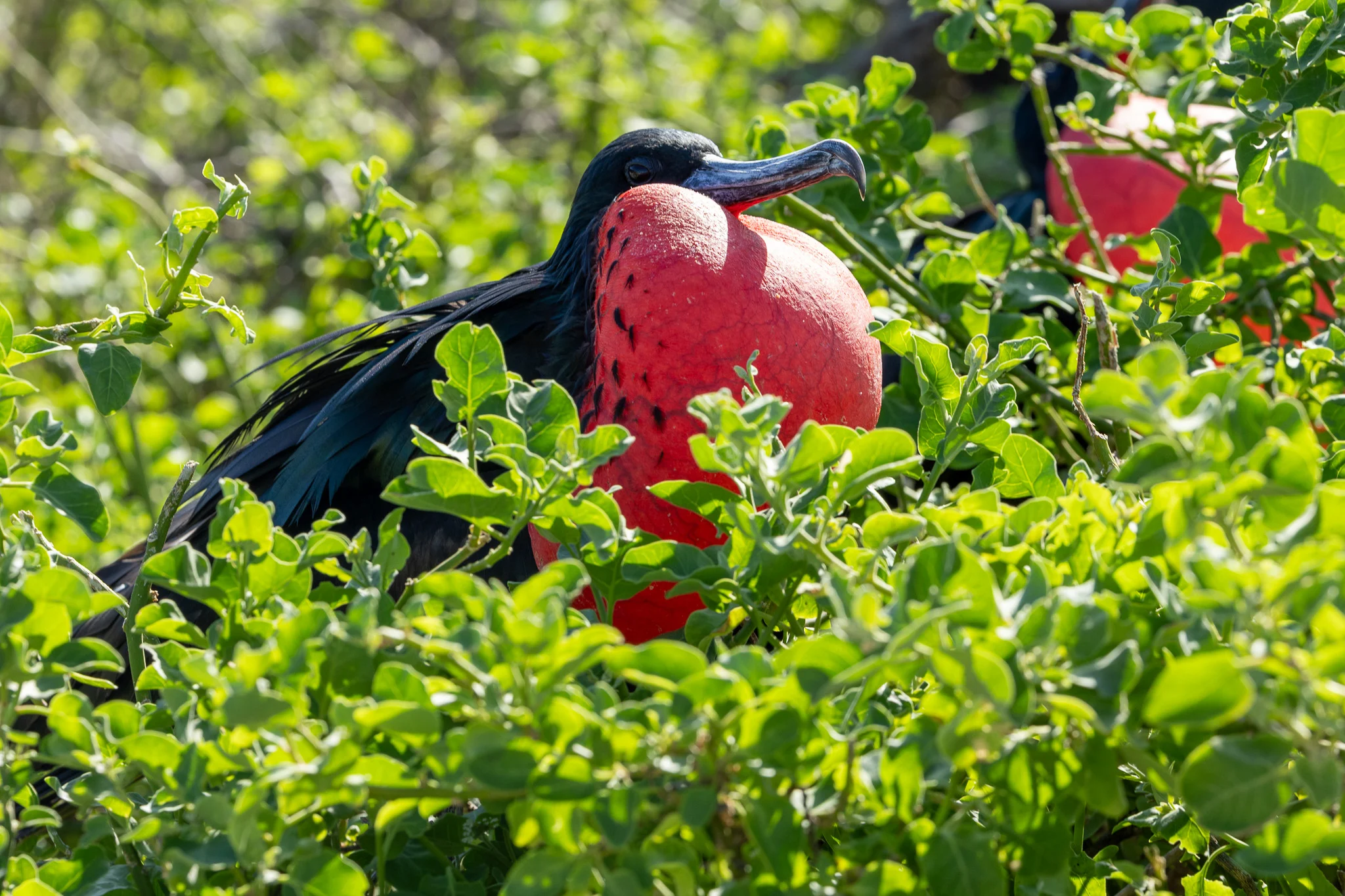
Day 2 — Genovesa Island. This one’s a horseshoe-shaped volcanic caldera with steep cliffs wrapping around a gorgeous bay. After a short panga ride, we waded ashore on Darwin Bay’s white-sand beach and followed a trail past mangroves and tide pools, spotting Great Frigatebirds, herons, mockingbirds, Red-footed and Nazca Boobies, shorebirds, turtles, marine iguanas, and sea lions.
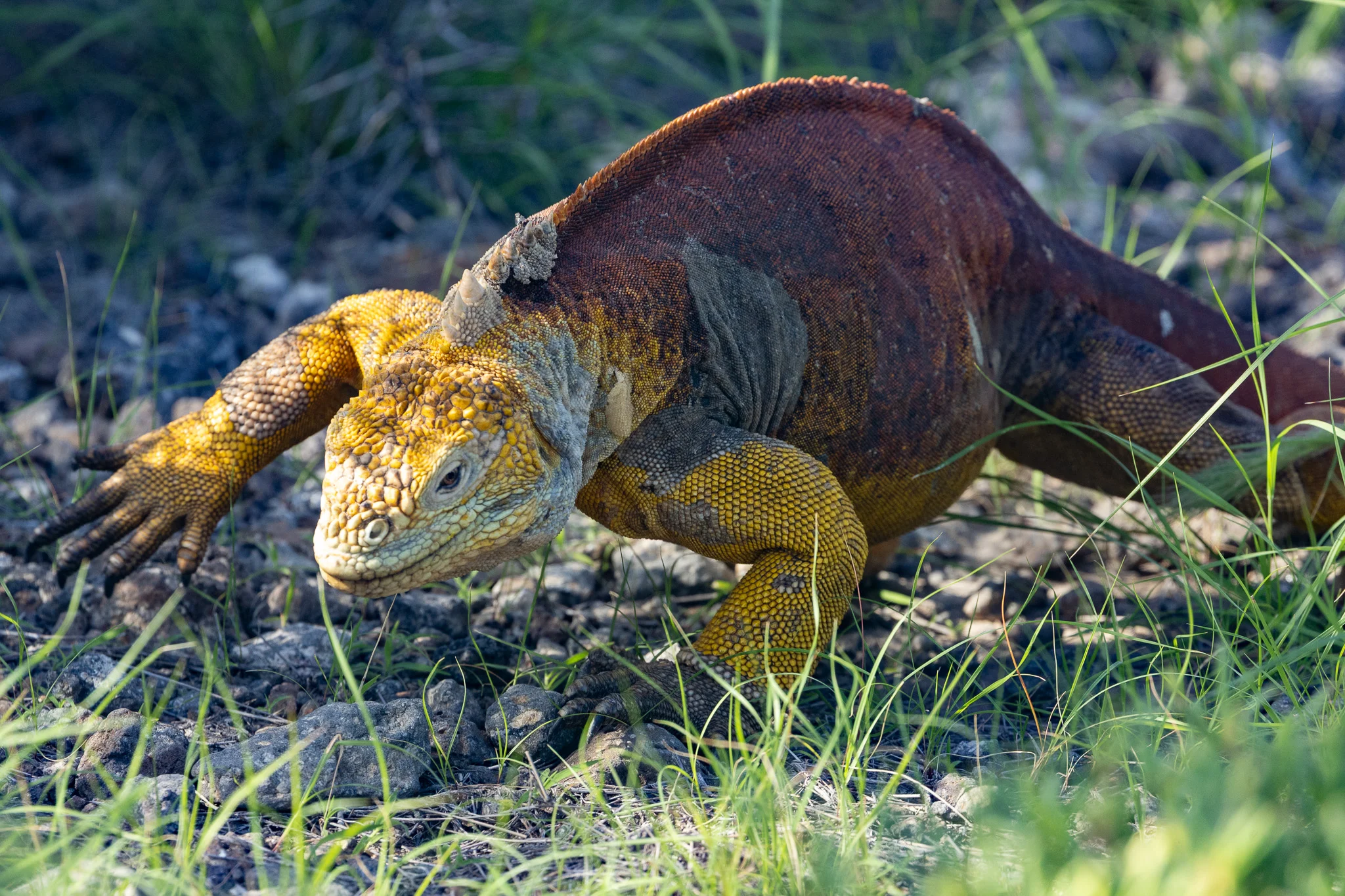
Day 3 — South Plaza Island. We landed on a small beach and walked past dramatic cliffs and a forest of Santa Fé opuntia cactus, on the lookout for Santa Fé land iguanas, Galápagos Hawks, Darwin’s finches, Galápagos Mockingbirds, and even Galápagos racer snakes.
Day 4 — Puerto Ayora and the Highlands. We bused up into the misty highlands of Santa Cruz to explore the lush Scalesia forests around Los Gemelos (“The Twins”) pit craters. After lunch at a local farm, we went hunting for giant tortoises in the wild — the very animals that helped shape Darwin’s thinking about natural history.
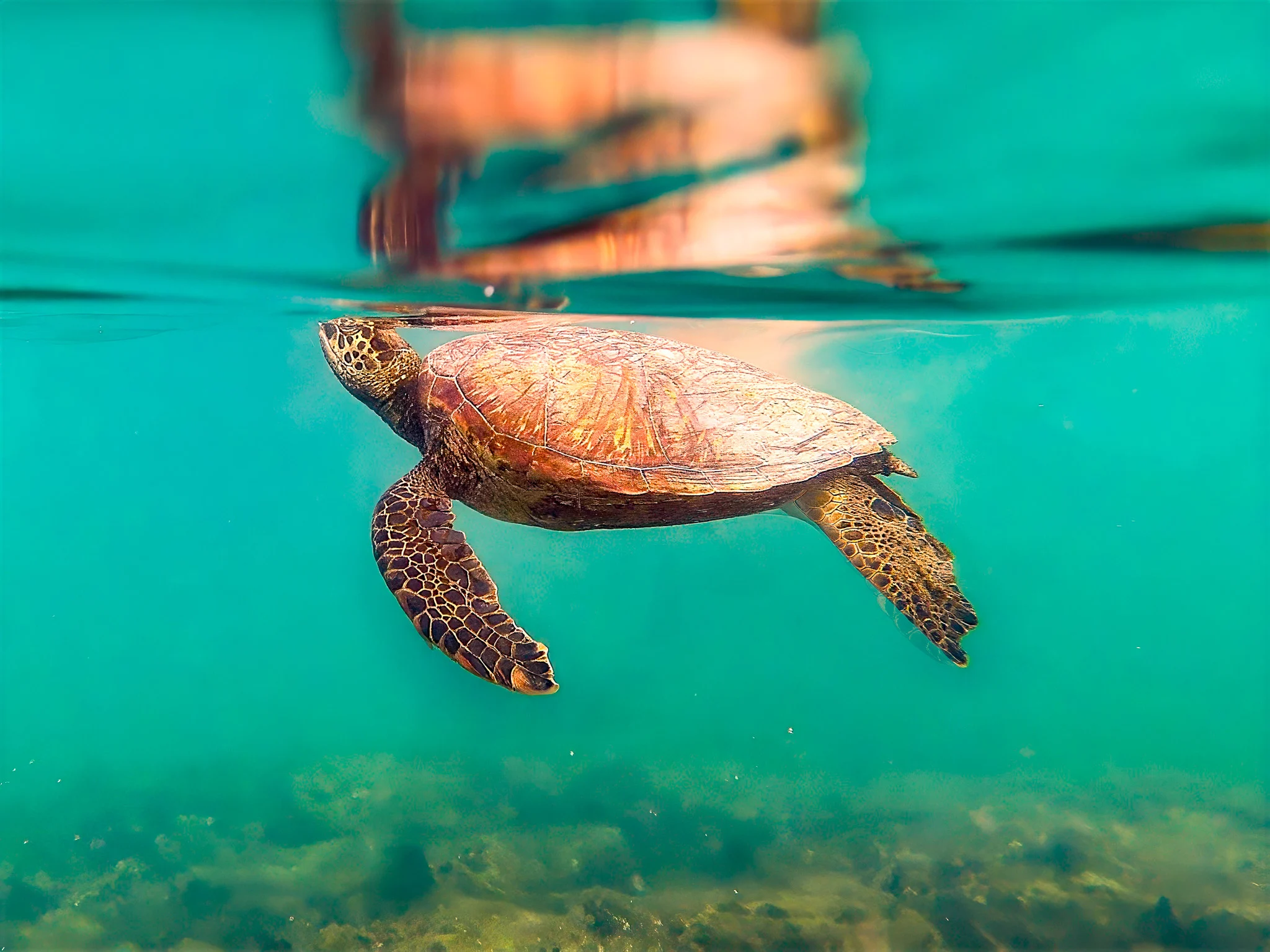
Day 5 — Floreana Island. One of the few inhabited islands in the Galápagos has a long, rough history of human settlement. We landed at Post Office Bay and walked to the historic mail barrel — British whalers set it up back in the 18th century as an informal post office, and visitors still leave postcards there today. That afternoon, we snorkeled at Champion Islet, one of the best spots in the islands, spotting tropical fish, moray eels, starfish, sharks, sea turtles, and sea lions.
Day 6 — Punta Suárez, Española Island. We hiked along lava beds and cliffs, watching green-and-red marine iguanas, sea lions, lava lizards, and big seabird colonies. From mid-March through December, this is one of the best places anywhere to see Waved Albatross, since they nest mainly here. In the afternoon, we tracked down the Española Mockingbird (yes, a carnivorous mockingbird) and more Darwin’s finches.
Day 7 — Cerro Brujo. The only spot in the Galápagos where you can see all three booby species — Red-footed, Blue-footed, and Nazca — nesting together. We walked the beautiful white-sand beach watching sea lions, pelicans, gulls, finches, mockingbirds, and boobies.
Day 8 — Black Turtle Cove, Isabela Island. A maze of coves and islets ringed by mangroves, where we spotted white-tipped reef sharks, sea turtles, spotted eagle rays, and golden cownose rays.
Day 9 — Sierra Negra and Chico Volcanoes, Isabela Island. We hiked around both volcanoes — Sierra Negra is one of the most active in the archipelago (it last erupted in 2005), and its crater is the second-largest in the world at 6.2 miles across. Volcán Chico is also active, with visible sulfur vents. That afternoon, a boat ride along the rocky shores turned up Galápagos Penguins and flightless cormorants.
We capped it off with a dinner of local food at a popular restaurant in town, then rested up before the long journey home, full of great memories from an unforgettable trip through Ecuador and the Galápagos.
Reflecting on the Experience
As I left this place, my thoughts drifted to the millions of years these islands had evolved before the arrival of humans.
The Galápagos Islands were first discovered by humans only in 1535, when Spanish bishop Tomás de Berlanga’s ship drifted off course en route to Peru, and for centuries afterward, they served mainly as a stopover for pirates, whalers, and sealers who used the islands’ giant tortoises as a convenient, long-lasting food source aboard ship—decimating several tortoise populations in the process. Ecuador formally claimed the islands in 1832, and early attempts at colonization included a penal colony and small agricultural settlements, with permanent human habitation taking hold gradually on a handful of islands like Santa Cruz, San Cristóbal, Isabela, and Floreana. Floreana in particular gained notoriety in the 1920s and ’30s for a strange, often dark saga of European settlers whose disputes and disappearances became local legend. Today, the Galápagos has a permanent population of roughly 30,000 people, concentrated in towns like Puerto Ayora, and human presence is tightly regulated by the Ecuadorian government and Galápagos National Park to balance residents’ livelihoods, a thriving tourism industry, and the conservation of the islands’ famously unique wildlife.
Today, humans and the native creatures thrive together. Each serving the other. Only natives of Galapagos are permitted to work and live there, just as the wild creatures that have survived there and evolved for millions of years.

Cheers
Dave
Related Posts





Stay Connected
Join my collector’s list to receive updates on new releases, exhibition openings, and behind-the-scenes stories.