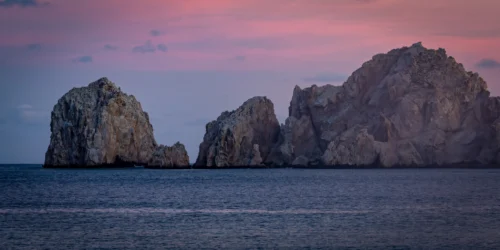
Lands End near Cabo Mexico
Land's End (El Arco) sits at the very tip of the
Baja California peninsula, just beyond the harbor of Cabo San Lucas, Mexico. It is the point where the Pacific Ocean meets the Sea of Cortez, and it is one of the most recognizable landmarks in all of Mexico.
The Arch
The star of the setting is El Arco, a natural rock arch carved by wind and wave action over thousands of years. It rises roughly 60 feet above the water, and its opening lets the sea flow straight through. The surrounding formations are granite, which gives the cliffs their pale, sun-bleached tones, streaked with darker minerals and often capped with white from the seabirds that roost there. The arch is a striking reminder that the peninsula's southern tip is essentially a mountain range sinking into the ocean.
Two Seas Meeting
Land's End is often described as the place where two bodies of water collide. On one side is the open Pacific, with its heavier swells and cooler currents. On the other is the calmer, warmer Sea of Cortez, sometimes called the Aquarium of the World because of its extraordinary marine diversity. The difference in energy is easy to feel from a boat. Waves can be noticeably rougher on the Pacific side, and the changing currents help draw in a rich variety of marine life.
Beaches Nearby
Two beaches flank the arch, and they could hardly be more different. Playa del Amor, or Lover's Beach, lies on the Sea of Cortez side. It is a small, sheltered crescent of sand that is pleasant for swimming and snorkeling, and it can be reached by water taxi from the marina or by kayak and paddleboard. Just across a narrow strip of land is Divorce Beach on the Pacific side. Its beauty is undeniable, but the strong currents and powerful surf make swimming extremely dangerous, and visitors are strongly advised to stay out of the water there.
Sea Lions and Wildlife
A well-known resident colony of California sea lions lounges on the rocks near the base of the cliffs, barking, sunning, and sliding into the water. Pelicans, frigatebirds, and gulls wheel overhead, and the surrounding waters attract tropical fish, rays, and sea turtles. Between roughly December and April, humpback and other whales migrate through the area, and sightings from tour boats are common. Snorkelers and divers can find vibrant reef life around Pelican Rock, a short distance away.
Sunsets and Atmosphere
The light here is spectacular at golden hour. As the sun sinks, the granite glows warm gold and orange, and the water turns deep blue and then pink. Sunset cruises, often with drinks and music, are a favorite way to experience it. Early mornings are quieter, with calmer water and fewer boats, which makes them ideal for photography.
Getting There
The easiest approach is by water. Glass-bottom boats, water taxis, kayaks, and larger sailing catamarans all depart from the Cabo San Lucas marina and reach the arch within about fifteen to twenty minutes. Because the arch is not accessible by road, the boat ride is part of the experience. Tours typically include views of the sea lion colony, the arch itself, and often a stop at Lover's Beach.
Local Culture and Tourism
Cabo San Lucas grew from a small fishing and cannery village into a major resort destination, and Land's End remains its symbol. The nearby marina is lined with restaurants, bars, and shops, giving visitors a lively base for exploring. Even so, the arch itself retains a sense of quiet grandeur, especially when seen from the water at the edge of the continent.
Visiting Tips
Bring sun protection, a hat, water, and reef-safe sunscreen. Respect posted warnings about Divorce Beach, and keep a reasonable distance from sea lions and other wildlife. Conditions can change quickly, so listen to boat captains about sea state and safety.
Overall, Land's End captures the dramatic meeting of desert, mountain, and ocean in one unforgettable scene.
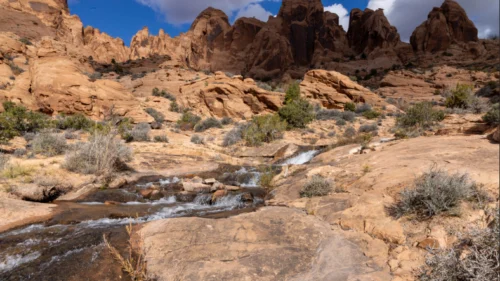
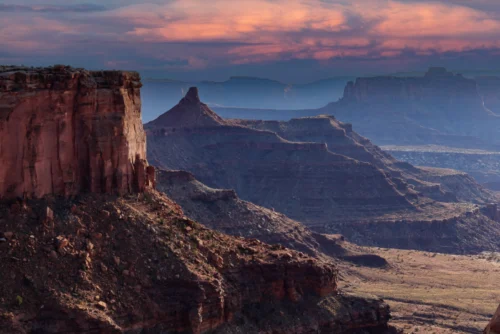 Canyonlands National Park sits in southeastern Utah, where the Colorado and Green Rivers carve through the Colorado Plateau and meet in a tangle of canyons, mesas, and buttes. Your photo captures the character of the place well: layered sandstone in deep rust and crimson, a dramatic sky at dusk, and a landscape that seems to stretch on forever. The Landscape The park covers more than 337,000 acres and is divided into four districts by the rivers themselves: Island in the Sky, The Needles, The Maze, and the rivers. Island in the Sky is the most accessible, a high mesa about 1,500 feet above the surrounding terrain. From its rim you look down on a vast sunken world of benches, spires, and canyons, much like the view in this image. In the left foreground of the photo is a sheer cliff of Wingate Sandstone, its vertical face glowing a deep brick red. Below it, a slope of broken rock and talus tumbles toward the canyon floor. In the middle distance, a pointed butte rises from a sprawling bench, and far off in the haze, more mesas stand like the ruins of ancient fortresses. Geology What you see here is a record of hundreds of millions of years. The rock layers were laid down in ancient seas, rivers, dunes, and tidal flats, then slowly uplifted and eroded. The cliff-forming red layers are often Wingate Sandstone, while the lower benches are made of softer rock like the Organ Rock and Cutler formations. Because hard layers cap softer ones, erosion produces the stair-step profile visible across the center of your photo. A hard cap rock protects the layer beneath it while the surrounding material wears away, eventually leaving isolated buttes and mesas. Salt deposits deep underground also shape the region. Over time the salt has shifted and dissolved, causing the overlying rock to buckle and collapse, which is how the Needles and Grabens districts earned their strange, fractured appearance. Light and Atmosphere The sky in this image, streaked with orange and pink clouds against a deep blue, shows why photographers favor sunrise and sunset here. Low-angle light warms the red rock and creates strong shadows that reveal the terrain's depth. The hazy blue layers in the distance create a sense of scale, with each ridge fading into the next. Storm clouds often build over the desert in late afternoon, adding drama to an already striking scene. Wildlife and Plants Though it looks barren from afar, the park supports a surprising range of life. Desert bighorn sheep move along the cliffs, and mule deer, coyotes, and foxes roam the lower terrain. Ravens and golden eagles ride the thermals above the canyons. Plants such as juniper, pinyon pine, blackbrush, and cryptobiotic soil crust, a living layer of bacteria and lichens, hold the fragile desert together. Visitors are asked to stay on trails to avoid crushing that crust, which can take decades to recover. Human History Ancestral Puebloans and earlier peoples lived and traveled through this region for thousands of years, leaving behind rock art and granaries tucked into alcoves. The Horseshoe Canyon unit of the park preserves some of the most remarkable pictographs in North America. Later, Ute and Paiute peoples, and eventually ranchers and uranium prospectors, passed through the area. The park was established in 1964. Visiting Canyonlands rewards patience. The Island in the Sky offers easy overlooks like Mesa Arch and Grand View Point, while backcountry roads like the White Rim Road attract mountain bikers and four-wheel-drive enthusiasts. Spring and fall are the most comfortable seasons, as summer temperatures can be extreme and winter brings occasional snow. Because the park has dark skies, stargazing is excellent, and the Milky Way is easily visible on clear nights. This image captures the essence of Canyonlands: scale, silence, and color on a grand geological stage.